SEO for Yorkshire businesses, from a Leeds team that builds and runs its own sites
SEO for Yorkshire businesses is rarely about one town. A trade covering Wakefield and Pontefract needs to turn up in both, and each town is its own small search market. LDC runs a Leeds radio station and, alongside it, a team that builds websites and does the search work on them, so we plan the pages, write them and fix the code underneath.
Our base is Leeds (registered office: Mabgate), and we work with businesses across West, North and South Yorkshire and the East Riding, mostly by phone, email and video call. Ring 07540725926 or use the form at the foot of the page, and we’ll tell you which towns and services look worth going after first.
Search results change with where the searcher is standing, so a business that covers ten towns is really competing in ten slightly different searches.
The map results at the top lean heavily on distance. Google shows businesses close to the person searching, which is why a firm based in Leeds rarely appears in the Harrogate map however good its profile is. The ordinary results underneath work differently: a genuinely useful page about your service in Harrogate can appear there without premises in the town, if the page earns it.
Competition varies too. A common trade in Leeds is usually the hardest search in the county to win. The same trade in a smaller town, or a specialist service anywhere, tends to face fewer serious rivals. For a business covering several towns, that points to a simple plan:
Win the map where you’re actually based, with a complete and active Business Profile.
Reach the surrounding towns through your website, with pages that help people there.
Start where rivals are thinnest and the jobs pay best, then widen out.
Town pages that aren’t doorway pages
A town page is worth publishing when it tells someone in that town something your other pages don’t.
Google’s spam policies warn against doorway pages: near-identical pages made to catch the search for each place, with the town name swapped and little else changed. Google can treat them as spam. A town page that deserves its place carries things only true of that area:
Jobs you’ve actually done there, each described in a line or two.
Answers to the questions customers in that area really ask.
Nearby places you reach from there, linked where they have pages.
The services you offer there, linked to their full pages.
Two honest approaches
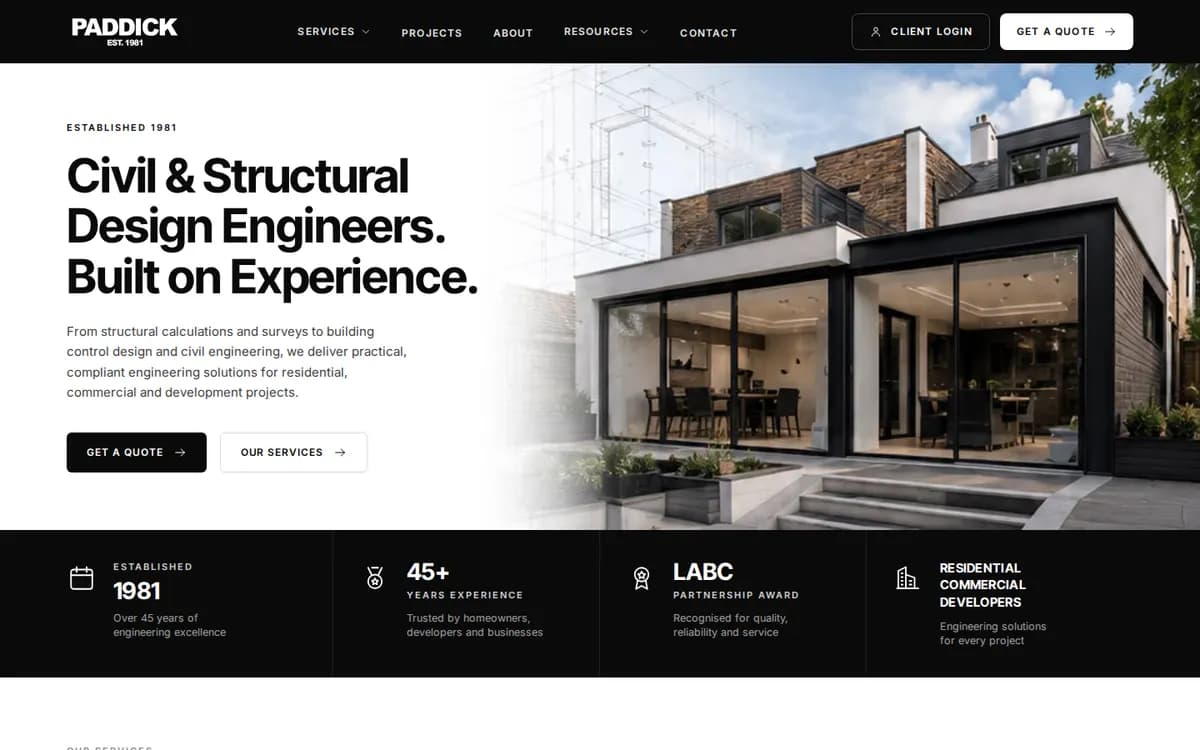
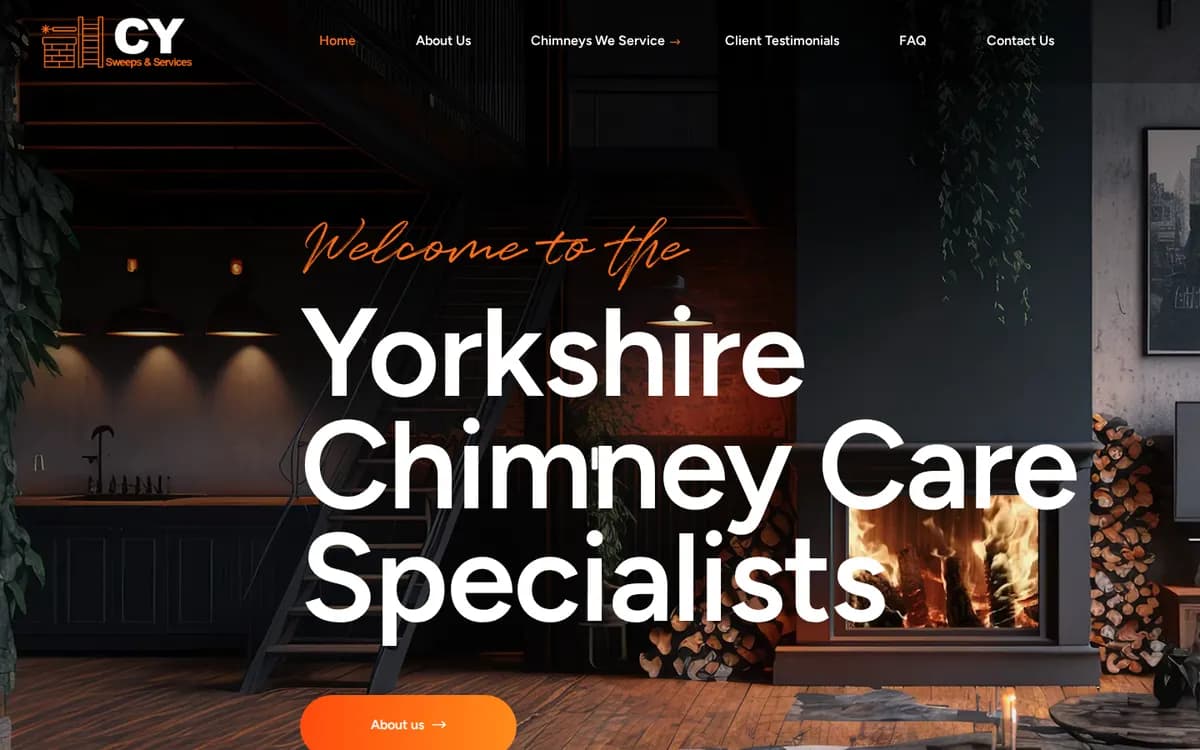
Paddick Engineering’s site builds a full page for each of its five towns. CY Sweeps, with less to say about each place, writes most of its inner page titles and its headings for Yorkshire and names its towns in its descriptions and copy instead. Both are open to inspect in the work below.
Google Business Profile when you cover many towns
You get one Business Profile for each real, staffed location, not one for every town you drive to.
Google only allows a profile where a business has a permanent presence with people working there. A virtual office or a relative’s address doesn’t count.
If customers don’t come to you, set the profile up as a service-area business: hide the street address and list the towns and areas you travel to. Then keep it active with reviews, replies and photos of real jobs from across your area.
What we do
Site and Search Console audit
How search engines crawl and index your site, and which searches and places already bring visitors.
Keyword map by trade and town
Each service paired with the towns you really cover, checked against what people actually search for.
Technical fixes in the code
Speed, indexing, redirects and sitemaps corrected on the site itself, since we build websites too.
Service and area page plan
One page for each real service, and town pages only where there’s local work to show.
Business Profile tidy-up
Categories, service areas, hours, photos and a review routine, set up for a business that travels.
Structured data
Schema for your business, areas, services and FAQs, matching each page.
Plain-English updates
What we changed, which towns and pages are moving, and what comes next.
From audit to area pages
1
Talk
Which jobs you want more of, and which towns you really reach.
2
Audit
Your site, your Business Profile and who already shows in your towns.
3
Map services against towns
Every service is set against every town. Some pairings deserve a page, some a mention in copy, and some nothing yet.
4
Fix and build
Technical problems get fixed first. Then the new and improved service and area pages go live.
5
Publish and submit
New pages are submitted in Search Console and linked from your stronger existing pages.
6
Review and extend
We watch which pages start drawing searches and enquiries, then add the next towns or services on the list.
Call us or get a quote
Talk it through with LDC on the phone, or send a few lines and we’ll come back to you with a quote.
Covering a county is priced by the work involved, not by how many towns you can list. These are the things that shape a quote.
Competition by trade and town
A common trade in Leeds or one of the bigger towns needs more work than a specialist service, or the same trade in Wetherby or Pontefract.
Whether your site is fit to build on
A site with deep technical problems may need fixing or rebuilding first, which web design across Yorkshire covers.
How many service and area pages earn a place
Five services across four towns doesn’t mean twenty pages. We quote only for combinations with real demand and something true to say.
Who writes the content
Useful area pages need local detail. You supply the jobs and photos, and we can do the writing or edit yours.
One-off set-up or ongoing work
The structure built and handed over, or monthly work that adds towns and keeps the profile busy.
Add-ons
Google Ads can cover a town while the SEO builds. For customers close to home, LDC Radio is on 97.8 FM, licensed for the City of Leeds, and on DAB in Leeds & Bradford.
Call 07540725926 or send an enquiry listing the towns and services you cover, and we’ll come back with a quote for that work.
How quickly things move
Some changes show within weeks: technical fixes, new pages being indexed and a corrected Business Profile.
Winning searches takes longer, and how long depends on the town. Smaller places and specialist services usually move faster than a common trade in Leeds, where established firms have a head start. Nobody can guarantee a position in any town, and we won’t pretend to. Page 1 is the aim for the searches that matter most to you, not a promise.
What access we’ll need
An honest list of your services and the towns you really cover.
Logins for Google Business Profile, Search Console and Analytics, or permission to set them up if they don’t exist yet.
Domain or DNS and hosting logins, so fixes go live without a wait.
Photos of real jobs, with a note of roughly where each one was.
Any SEO reports or audits from past work, even old ones.
The questions customers ask you most, on the phone and in person.
Sites you can check yourself
Four live sites, four different answers to the question of place. Read their page titles and menus to see how each handles towns, regions or the whole country.
Civil and structural engineering, Yorkshire
Paddick Engineering
The fullest example of the town-page structure. paddick.online has separate pages for Leeds, Bradford, Wakefield, Huddersfield and Harrogate, and each one lists local services, answers area questions, links to nearby places and describes recent jobs in that town. Service and area pages link both ways.
The lighter approach, with no separate town pages. yorkshirechimneysweep.co.uk names Yorkshire in its headings and most of its inner page titles, and towns from Leeds and Wetherby to York and Sheffield in its descriptions and copy, and gives each fireplace and stove type its own page. For a sweep travelling out from one base, that keeps the site honest about where the work is.
UK planning application data (subscription service)
Planning Insights
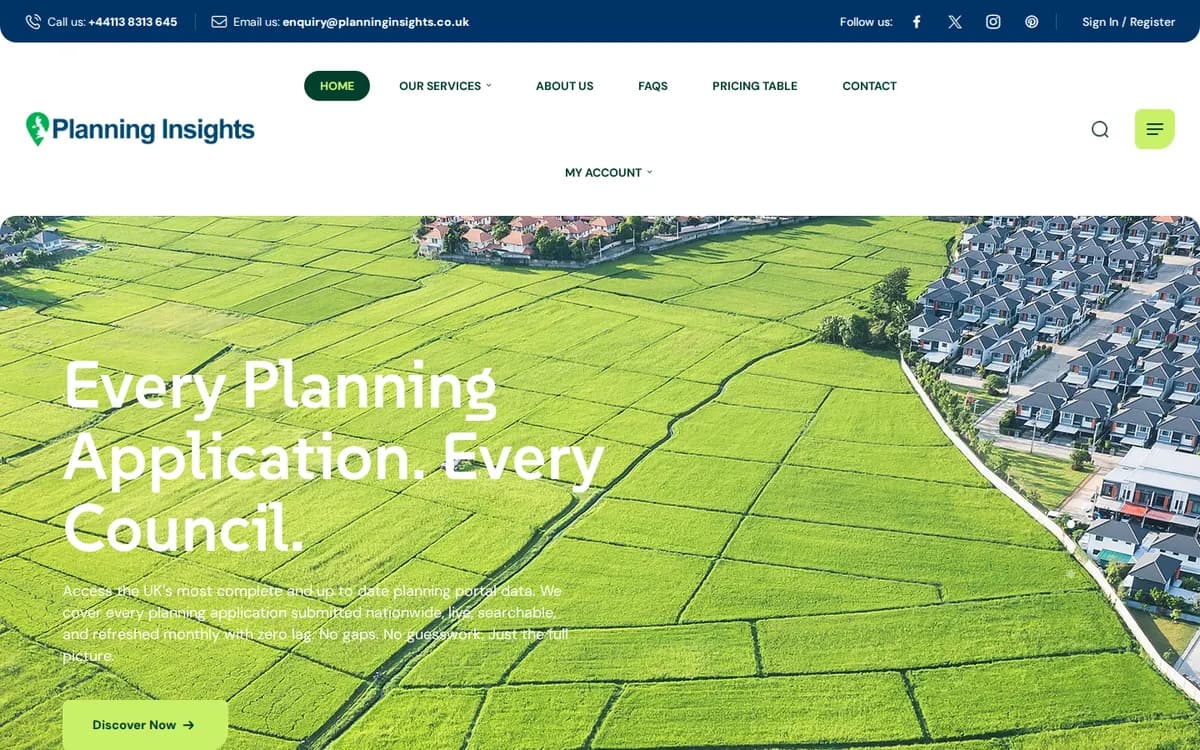
The national case. Planning Insights sells to buyers anywhere in the UK, so its pages are written around searches like ‘planning applications near me’ and ‘UK planning data’ instead of towns. One in-depth landing page with a how-to section and FAQs does most of the work, with XML sitemaps and structured data underneath.
Community radio station, Leeds (97.8 FM, DAB, online)
LDC Radio
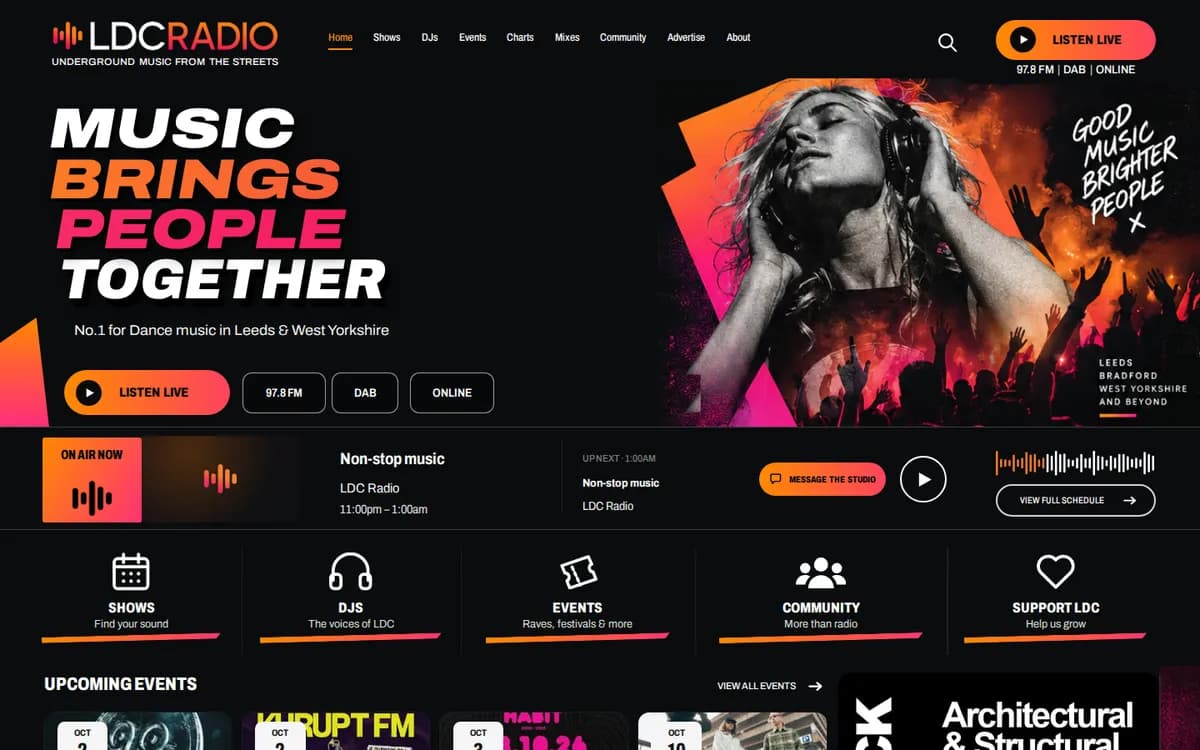
The station’s own site takes a regional line. Community guides cover nightlife, eating out and things to do across Yorkshire, and event pages list dance nights in Leeds and Bradford. When the site left WordPress, hundreds of old addresses were pointed at their new pages rather than dropped, so links from other sites still reach a live page.
If you sell across the UK, the work moves from places to questions.
A Yorkshire firm with customers everywhere can’t win on location, because there’s no single location to win. It needs pages that answer what buyers type wherever they are, on a site search engines can read without effort.
If that’s you, tell us about it and we’ll plan for national searches instead.
Questions
SEO Yorkshire questions
Can I rank in towns where I don’t have premises?
In the ordinary search results, yes, if you have a genuinely useful page about your service in that town on a site search engines trust. The map results are harder, because they weigh how close a business is to the searcher, so a firm based in Leeds will usually struggle to appear in the Sheffield map. Most multi-town firms win their home area on the map and the rest through their website.
Do town pages still work?
Good ones do. A page that shows real jobs in a town, answers local questions and links to the services you offer there is useful to a reader. What stopped working is the copy-and-paste version with the town name swapped and nothing else changed. There’s more on the difference in town pages that aren’t doorway pages.
Should I start with Leeds or the smaller towns?
Usually the smaller towns, or your most specialist services, unless Leeds already brings most of your profitable work. Common trades in Leeds face the stiffest competition in the county, so progress there tends to be slowest. Pages for places like Wakefield, Halifax or Harrogate can start bringing enquiries sooner while the Leeds work builds.
Do I need a separate Google Business Profile for each town?
No. Google allows a profile only where you have a real, staffed location, so a business run from one base gets one profile. You add the towns and areas you travel to as service areas on it, and hide your address if customers don’t visit you. Creating profiles at addresses you don’t work from breaks Google’s rules and can get them suspended.
Can you do SEO for a business that sells across the UK?
Yes. The work shifts from towns to topics: pages built around what buyers search for wherever they are, content that answers their questions properly and a technically sound site underneath. Planning Insights, one of the sites we’ve built, is written for UK-wide searches rather than local ones.
What if a town page brings visits but no enquiries?
Then the page is answering the wrong question or hiding the next step. We look at what people searched to reach it in Search Console, whether the services listed match what they wanted, and whether the number and form are easy to find on a phone. Usually the fix is the page itself, not more pages.
Get a quote
Tell us what you’re trying to achieve.
A few lines is plenty. Tick what you think you need - or “Not sure” - and we’ll reply by email to talk it through and quote.