Web development in Leeds: websites, web apps and the systems behind them
Web development in Leeds from a team that builds and runs its own platform. LDC codes business websites, web applications and the systems that feed them, mostly in Next.js and React, and on WordPress when that suits the job better. You’re looking at one of ours: this site takes its schedule, shows and events live from LDC One, the station’s management system, which we also built.
We’re a Leeds team working with businesses across Yorkshire. Below is what we build, four live sites you can open and inspect, how a build runs and what moves the price. Once you’ve seen enough, phone 07540725926 or use the enquiry form.
We build four kinds of thing, and most projects mix two or three of them.
Business websites with service and local pages
One page for each thing you sell, clear routes to call or enquire, and a structure search engines can follow. If the look and layout are what matter most to you, our web design page covers that side in more depth.
Web applications
Anything a visitor signs into, searches or fills in step by step: accounts, dashboards, searchable listings, and booking or enquiry flows that ask the right questions. These need data, permissions and testing that a brochure site never does.
Integrations
Connecting your website to the services you already pay for: payments, a CRM, email marketing, accounting, or anything else with an API. The aim is simple. Nobody should have to retype an enquiry from one system into another.
The data behind the site
Sometimes the website is only the front of a bigger system. On ldcradio.co.uk, LDC One holds the schedule, shows, presenters and events, and passes them to the public pages through a content API. Nobody edits a web page when a show moves. When the main users are your own staff or clients rather than people arriving from search, see bespoke software.
Why we build with Next.js and React
Next.js renders each page on the server, so it arrives as finished HTML that loads quickly and that search engines can read without running any scripts. React lets us build a component once and reuse it, so a quote form or a service card behaves the same way on every page it appears on.
It also leaves the data source up to you. Content can live in a database, a headless content system, or an API from software you already run, whichever fits the project.
It isn’t always the right answer. If you want to change every page yourself in a visual editor, or you need a standard online shop with a large choice of plugins, WordPress is often the better fit, and we build on that too. We’ll tell you which we’d pick for your project and why.
You can check our Next.js work yourself. View the page source on paddick.online or on this site and you’ll see the Next.js files loading.
Builds you can check
Four live websites: two written in Next.js, two built on WordPress. Open them and look at how each one is put together.
Civil and structural engineering, Yorkshire
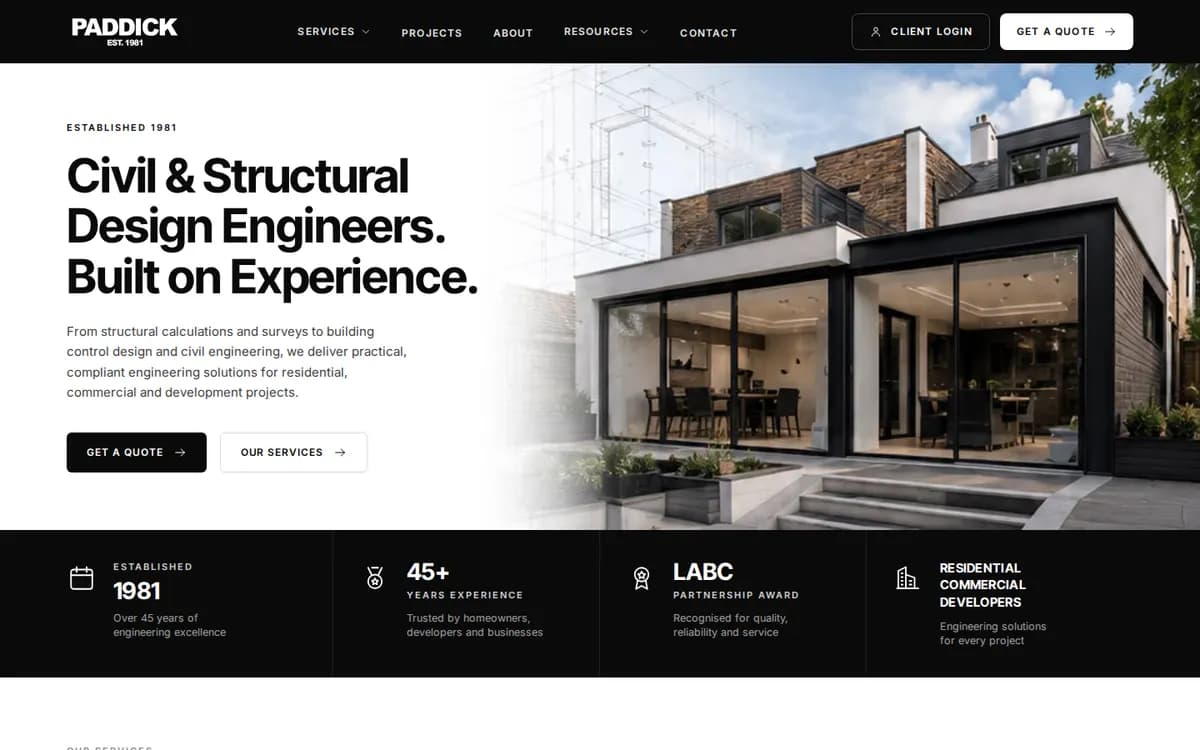
Paddick Engineering
Written from scratch in Next.js. Each of its 19 engineering services has its own page, and a free drainage falls calculator gives a live answer for the fall, gradient or maximum run. The quote form collects the service, site postcode and project details before an engineer replies.
Community radio station, Leeds (97.8 FM, DAB, online)
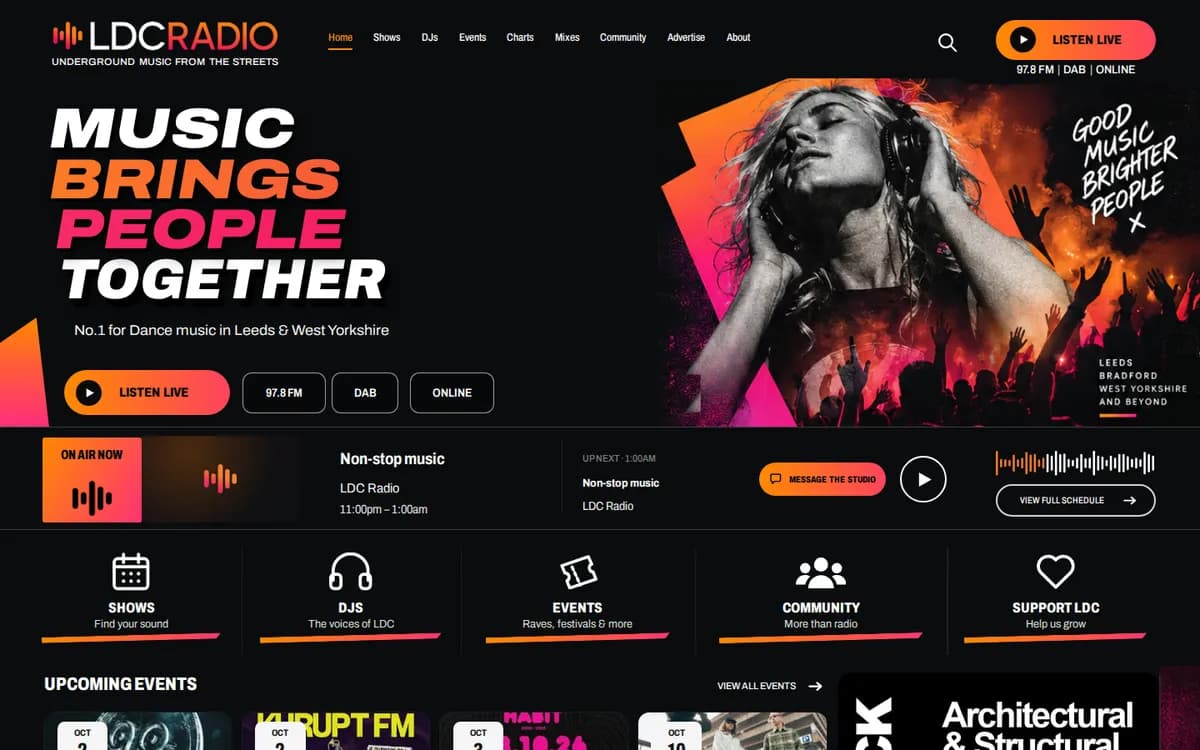
LDC Radio
This site runs on Next.js and draws its content live from LDC One through a content API. When a show moves or an event is added, the schedule, show and event pages update themselves. Site search covers shows, DJs, events, mixes and news.
UK planning application data (subscription service)
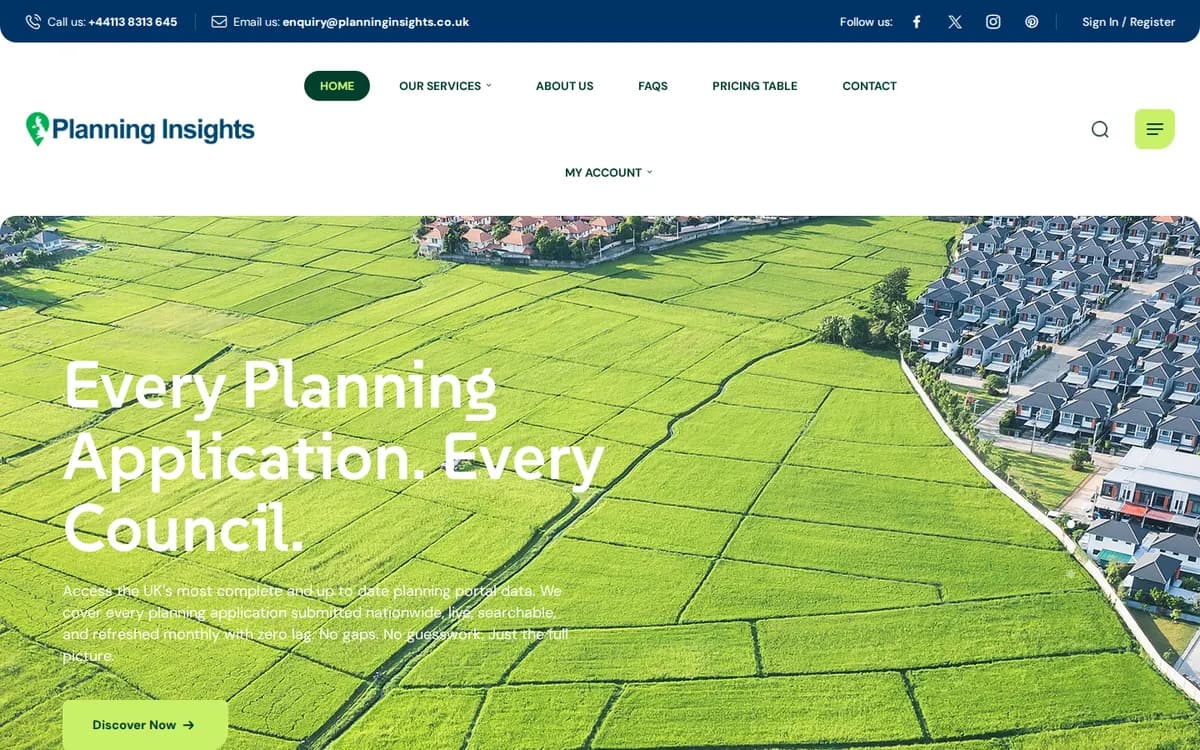
Planning Insights
A WordPress and WooCommerce build rather than Next.js, which suits a business selling subscriptions. Customers can register, sign in, manage their account and check out. The homepage enquiry form makes each visitor pick a service, so leads come in tagged.
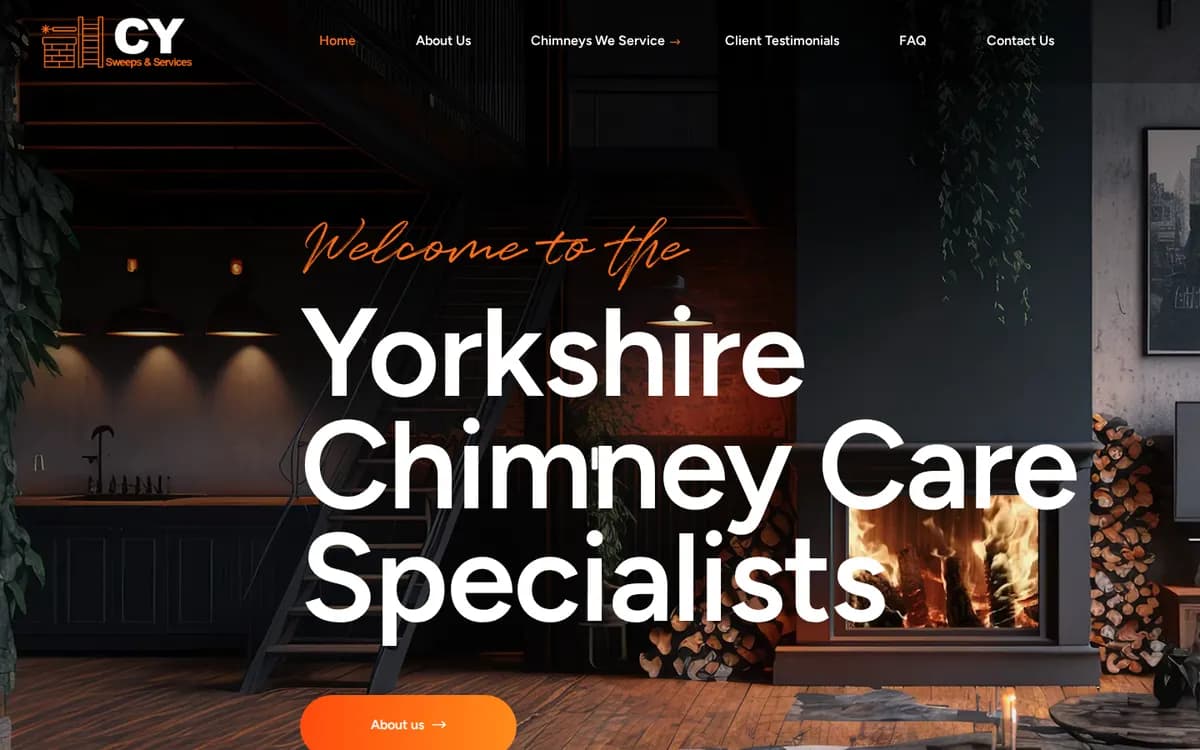
Built on WordPress with Elementor. There is a separate page for each fireplace and stove type the sweep works on, tied together by a services index. Tap-to-call links appear at the top, mid-page and at the foot, and phones get a collapsible menu.
A rebuild shouldn’t cost you the links, bookmarks and search listings your old site has built up. We leave your current site running until the new one is ready, then switch over in one step.
Before launch, we list every address the old site uses and send each one to its closest new page with a permanent redirect. Sections you’re retiring are marked as gone, so search engines drop them cleanly instead of meeting error pages.
We did exactly this when ldcradio.co.uk moved off WordPress. Hundreds of old addresses now lead to their new pages, including many we dug out of the Wayback Machine.
How we run a build
1
Scope
A call or a short meeting to agree what the site must do, who it’s for, and what counts as finished for the first release.
2
Plan the data and pages
We map out the page templates, the content each one needs and where that content lives: typed in, pulled from another system or imported from your old site.
3
Build on a preview
You get a preview you can click through before launch, on your phone and your computer, and your feedback goes straight into the build.
4
Test
Phones and desktops, forms and click-to-call, page speed, accessibility and every redirect from the old site are checked before anything goes live.
5
Launch
We point the domain at the new site, submit the sitemap to Google and recheck the live pages once the switch has settled.
6
Improve
Once real visitors are using it, we fix whatever they trip over and add the next features in planned releases.
Standard on every build
Responsive build
Layouts planned for phones first and tested at real screen sizes, so nothing is squeezed or cut off.
Technical SEO basics
Unique titles and descriptions, canonical tags, clean addresses, an XML sitemap and a robots file that lets search engines in.
Structured data
Markup that tells search engines what each page is: your business, your services, your FAQs and your breadcrumbs.
Enquiry routes
Click-to-call on phones, and enquiry forms that ask the questions you need answered and arrive where you’ll see them.
Accessibility checks
Sensible heading order, alt text on images, keyboard access and readable contrast, all checked before launch.
Redirects from the old site
If we’re replacing an existing site, every old address is mapped to a new one.
Analytics
Analytics set up if you want it, so you can see which pages people actually use.
Logins
We agree up front who holds which logins, for the domain, the hosting and the code.
Call us or get a quote
Talk it through with LDC on the phone, or send a few lines and we’ll come back to you with a quote.
There’s no price list here, because two ten-page sites can be very different amounts of work. These are the things that move a quote up or down.
Distinct page templates
Ten service pages made from one template cost far less than ten pages that each need a layout of their own.
Logins, roles and data
Accounts, permissions and anything stored in a database add design, build and testing time.
Integrations
Each connection to a payment provider, CRM or other system has to be built and tested against that system’s own rules.
Migration and redirects
Moving content across from an old site and redirecting its addresses is careful work, and it grows with the size of the old site.
Content readiness
Finished words and photos keep a build moving. If we’re writing or sourcing them, that goes into the quote.
Feedback speed
Quick, clear decisions keep the project short. Long gaps between feedback rounds stretch it out.
Tell us what you need on a short call and we’ll quote for it. The number is 07540725926; the form sits at the bottom of this page.
How long a build takes
It depends on the templates, the data and how ready your content is, so we’d rather give you a date for your project than a number from a table. A site made from a handful of templates with finished content moves much faster than a web application with logins and integrations.
A large build doesn’t have to arrive all at once. We can release it in phases: the core pages first, then the account area, the booking flow or the integration as each one is ready and tested.
Before we talk
None of this is essential for a first call, but it helps us give you a straight answer sooner.
Your current website address, and who has access to the domain and the hosting.
The systems the site has to connect to, such as payments, a CRM, a booking tool or accounting software.
The pages and journeys that matter most to you, like the quote form, the checkout or the sign-up.
Two or three sites you like, and what exactly you like about them.
Any deadline you’re working to, and the reason for it.
Questions
Web development Leeds questions
What’s the difference between a website and a web application?
A website mostly shows information: services to read about and a way to get in touch. A web application lets people do things with their own data, such as sign in, search records, manage bookings or check a dashboard. Plenty of projects are both. ldcradio.co.uk is a website on the front, fed by a web application behind it that the station’s team uses every day.
Why Next.js and React rather than WordPress?
For sites with lots of data, custom features or pages generated from another system, Next.js gives us speed, a clean structure and full control of the code. WordPress is better when you want to edit everything yourself in a visual builder, or you need an off-the-shelf shop. We build both, and we’ll recommend the one that suits your business rather than our own habits.
Can you connect a site to our CRM, booking or payment system?
Usually, yes, as long as the tool has an API or another supported way in. We check what it allows before we quote. Our own station system talks to our accounting package and to the company that collects our Direct Debits, so connecting systems that were never designed to talk to each other is familiar work for us.
What happens to our current website while you rebuild it?
It stays live and untouched until the new site is ready. We build on a separate preview, map every old address to its new page and set up the redirects, then switch over in one step. Visitors and search engines following an old link land on the right new page instead of an error.
Do you use templates or page builders?
Both, depending on the job. CY Sweeps and Service and Planning Insights are WordPress sites made in Elementor, which lets the owner change pages without touching code. paddick.online and ldcradio.co.uk are written from scratch in Next.js. We choose the route per project and explain the trade-off before you commit.
Can you get our new site to rank on Google?
Nobody can guarantee rankings, and you should be wary of anyone who does. What we can do is build the site so search engines can read and understand it: fast pages, clean structure, structured data, proper titles and working redirects. Page 1 is the goal we work towards, never a promise. Our SEO page covers the ongoing work.
Get a quote
Tell us what you’re trying to achieve.
A few lines is plenty. Tick what you think you need - or “Not sure” - and we’ll reply by email to talk it through and quote.